
A suit pre-production meeting should convert approved product decisions into one controlled bulk-production plan. It is the point where the buyer and supplier verify that the current sample, technical files, materials, quantities, quality checks, packing instructions, responsibilities, and schedule all refer to the same order version.
This checklist is for menswear brands, retailers, uniform buyers, formalwear businesses, distributors, and sourcing teams preparing a wholesale or private-label suit order. It is an operational framework, not a promise of production capacity, lead time, quality outcome, or destination-market compliance. Those points depend on the confirmed programme, written agreement, and evidence reviewed for the actual order.
1. Circulate one agenda and issue sheet
Before the meeting, send a short agenda and a document register. The register should list the purchase order or order reference, style codes, current tech-pack version, measurement chart, approved sample, fabric and trim references, artwork, size-and-colour matrix, packing file, inspection direction, destination, and delivery milestones. Mark each record as approved, provisional, open, or superseded.
Do not begin the meeting with several folders that all contain a file called “final.” Name the effective version and date for every record. If an approval is still open, identify the evidence and decision owner needed to close it rather than treating silence as acceptance.

2. Reconcile the approved sample with the tech pack
Review the physical or clearly identified approved sample beside the current product file. Confirm the garment components, silhouette, lapel, closure, pockets, vents, lining, buttons, trouser construction, vest if included, visible finishing, labels, and packing presentation. Record every approved deviation between the sample and the earlier specification.
The buyer should state which reference controls if the sample and document differ. A visually approved garment should not silently override an unreviewed measurement, material, label, or packing requirement. The suit tech-pack checklist helps organise the effective product records, while the sample approval process separates approved points from corrections and open decisions.
3. Confirm materials, colours, and cutting release
List the approved or nominated fabric, lining, buttons, thread, labels, artwork, packing components, and other trims. Connect each item to a supplier reference, swatch, sample, lot, or approval record where available. Identify any material still awaiting availability, shade, composition, performance, artwork, or bulk-delivery review.
Agree who may release each material for cutting or use. For bulk fabric, the meeting should identify the expected article or quality reference, colour, lots, usable-width check, shade review, visible-defect method, quantity reconciliation, and any agreed technical evidence. The bulk fabric inspection checklist provides a separate control for the material actually received for production.
4. Freeze the size, colour, and destination matrix
Read the order matrix by style, component, colour, size, quantity, and destination. Reconcile its totals with the commercial order and packing plan. For uniforms or named-wearer programmes, identify reserve units, replacements, site allocation, and any wearer-specific packing reference. For retail or online programmes, confirm internal SKU, barcode, store, or warehouse allocation fields only where the buyer has supplied and approved them.
Record the effective size chart and grading reference. If one size or fit issue remains open, show the affected quantities and decision deadline. A total order quantity does not prove that the production and packing teams have the correct size-and-colour distribution.
5. Map the production route and responsibility owners
Ask the supplier to walk through the proposed route from material receipt and cutting to preparation, sewing, in-process checks, pressing, finishing, final inspection, packing, and handover. Name the commercial, product, production, quality, and logistics contacts responsible for decisions and reporting.
The purpose is not to create an artificial daily output claim. It is to identify dependencies, line or skill requirements, control points, and escalation paths for this garment. The bulk suit capacity-planning guide explains how approvals, materials, product complexity, line loading, quality work, and packing affect usable capacity.

6. Agree quality checkpoints and evidence
Define which records will be reviewed before cutting, during production, after finishing, and before shipment release. Useful evidence may include material identity, shade or lot records, first-output review, measurements, workmanship findings, component checks, label and artwork verification, quantity and assortment checks, packing evidence, corrective actions, and reinspection results.
State the approved reference, sample plan or inspection scope, report owner, decision authority, and escalation route. Avoid a broad instruction such as “standard quality” when the buyer expects specific measurements, appearance, branding, or packing. A quality report supports a decision; it does not automatically authorise shipment.
7. Confirm packing and receiving readiness
Review one realistic unit and carton scenario against the order matrix. Confirm hanging or folded presentation, garment covers or polybags, hangers, tissue, spare components where specified, labels, hangtags, size identification, inner-pack count, carton assortment, carton marks, packing-list fields, and destination allocation.
Connect the factory packing record to the buyer's receiving process. The warehouse, store, hotel, school, event team, or distributor should be able to identify what arrived and where it belongs without rebuilding the order from informal messages. Any destination-specific labelling or compliance requirement remains subject to the buyer's qualified review and written instruction.
8. Build the milestone and escalation record
List the remaining approval dates, material-readiness checks, planned production window, inspection points, packing review, document handover, and required receiving date. Show assumptions and dependencies instead of presenting a date without its conditions. Name who reports a missed milestone, who reviews the impact, and who may approve a recovery action.
If a product, quantity, destination, or timing decision changes after the meeting, use written change control. Identify the affected files, materials, work already completed, lots, inspection references, packing, schedule, and commercial assumptions before releasing the revision.
9. Close the meeting with production-release authority
End with a decision log rather than a general statement that the order is “ready.” List closed items, open blockers, owners, deadlines, required evidence, and the person authorised to release bulk production. Send the minutes with the final issue sheet and obtain acknowledgement from the relevant buyer and supplier contacts.
The release should identify the exact order and product version it covers. Later approval of an unrelated file should not be treated as a blanket release for every style, colour, size, label, or destination.
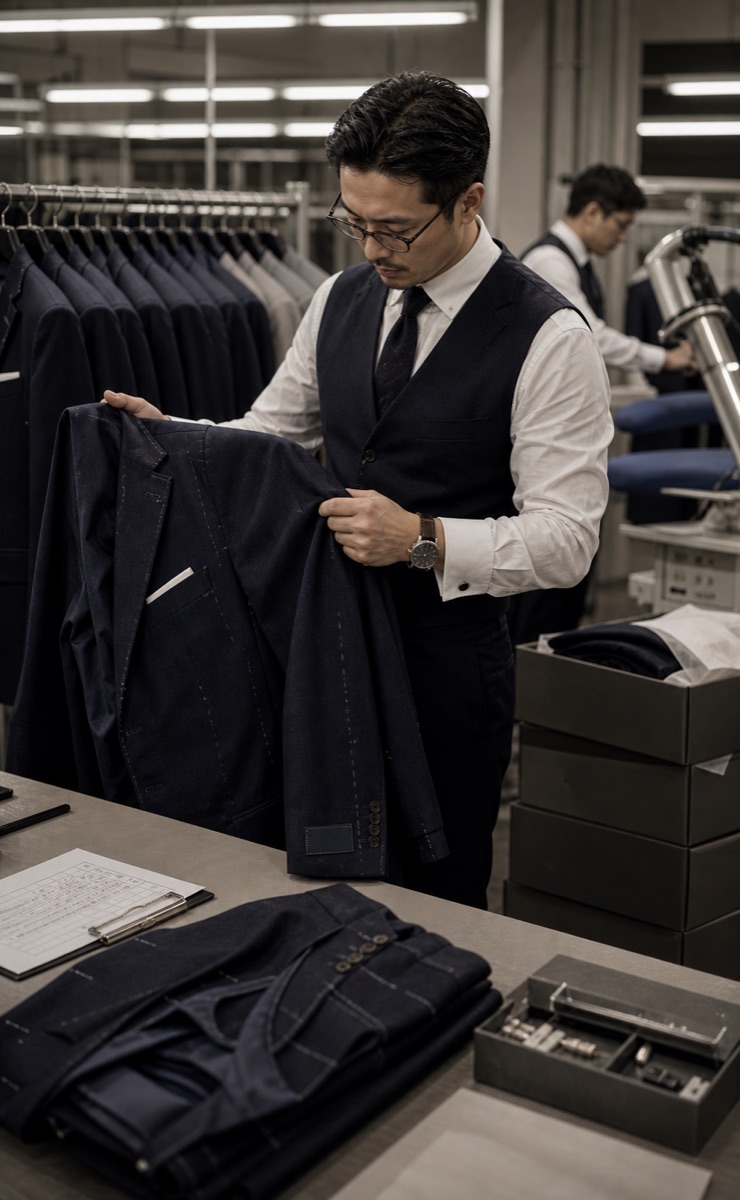
Suit pre-production meeting checklist
- One agenda, order reference, document register, and effective versions
- Approved sample reconciled with construction, measurements, materials, and packing
- Fabric, trims, labels, artwork, bulk-material checks, and cutting authority
- Final style, component, colour, size, quantity, and destination matrix
- Production route, named owners, control points, and escalation contacts
- Quality evidence, corrective action, reinspection, and release authority
- Unit, inner-pack, carton, packing-list, and receiving requirements
- Milestones, dependencies, open blockers, change control, and written minutes
MrSure is a China-based suit supplier serving international B2B buyers. We can review a pre-production brief after the buyer shares the current product file, approved-sample status, material direction, order matrix, destination, packing needs, and target receiving window. Buyers can send a sourcing enquiry with the information already available; exact prices, order minimums, schedules, capacity, materials, and commercial terms depend on the confirmed programme and written agreement.