
A suit tech pack is the working document that helps a buyer turn a product direction into questions a manufacturer can review. It should make the requested garment visible without pretending that an image, a mood board, or an early sketch is already a production-ready specification.
For brands, retailers, trading partners, and marketplace teams, the useful goal is not to produce a perfectly formatted file on day one. It is to separate confirmed requirements from open decisions so the supplier can assess sampling, materials, construction, labels, packing, and the approval route against one current reference.
1. Start with a controlled product reference
Give the style a clear internal name or code. State whether it is a two-piece suit, three-piece suit, tuxedo, blazer, or coordinated programme; then identify the target wearer, sales channel, intended use, fit direction, and season or climate context. Include reference images, but annotate what each one proves: silhouette, lapel direction, pocket treatment, trouser shape, colour mood, or presentation only.
Do not assume a visible shirt, tie, accessory, fabric, or finishing detail is included merely because it appears in a reference photo. List the garment components and any accessories separately so the buyer and manufacturer are reviewing the same scope.

2. Record construction and component choices in plain language
Describe the jacket and trouser decisions that matter to the buyer: lapel shape, closure, pockets, vents, lining direction, sleeve buttons, trouser front, waistband, hem, and whether a vest is part of the set. If a feature is undecided, mark it as open rather than copying a detail from an unrelated image.
For branded programmes, identify the expected label, size label, care label, hangtag, barcode, spare button, garment cover, and carton-mark scope. Artwork, placement, material, colour, and approval status belong in the file; a logo file alone does not explain how it should be used on the garment or packing.
3. Connect measurements to the sample and size range
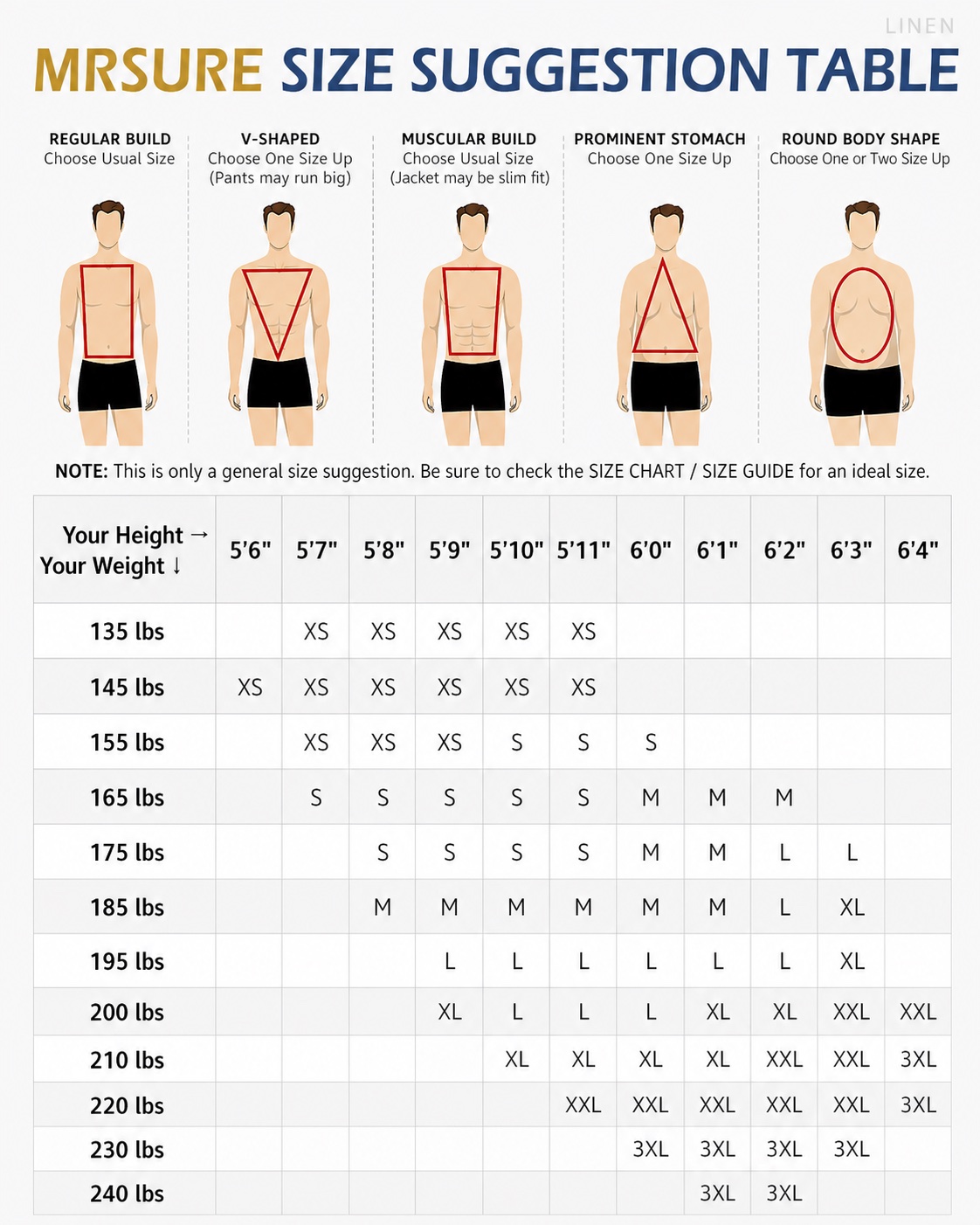
A tech pack should point to the measurements the buyer needs to control, including jacket and trouser points of measure, intended base size, and any grading direction. It should not invent a universal tolerance or claim that a generic chart guarantees fit. The approved sample and confirmed measurement record remain the practical reference before bulk cutting.
Where fit direction is important, note the target silhouette and the visual issue to review—such as shoulder expression, jacket length, sleeve balance, waist suppression, rise, or trouser opening. Keep sample comments versioned so a late measurement change is not lost in an email thread.
4. Separate material, colour, and trim approvals
Name the fabric direction, but do not represent a screen image as a final fibre-content, weight, finish, availability, or colour standard. Attach the actual swatch, supplier reference, or approved sample record when available. Treat jacket fabric, lining, buttons, thread, labels, and packing components as separate fields because they may have different sourcing and approval paths.
For a colour range, use a consistent internal colour name and link it to the relevant material reference. This makes it easier to review sample photos, size-and-colour matrices, product imagery, packing lists, and reorders without relying on an ambiguous word such as “blue” or “beige.”

5. Add a revision and release section before requesting a quotation
Every page should show a version date and the person or team responsible for approval. Keep a simple change log: what changed, why it changed, and whether the supplier must quote, sample, or merely acknowledge it. When buyers compare manufacturers, send the same current product file to each party; otherwise the resulting quotations may not cover the same garment or service scope.
Before bulk planning, link the final tech pack to the approved sample, measurement chart, material and trim references, label artwork, packing instructions, size-and-colour matrix, inspection direction, and shipment handover requirements. The file does not replace discussion, but it makes the discussion traceable.
Buyers can pair this checklist with the suit sample approval process, the suit size chart manufacturer guide, the wholesale suit order specification checklist, or send a sourcing inquiry with the documents they already have.
Make the tech pack executable with an approval matrix
A manufacturer needs to see which records are approved, provisional, or still open. Add a simple matrix for the product reference, measurement chart, material and colour, lining, buttons, labels, artwork, packaging, and physical sample. For each item, record the current version, date, owner, reviewer, status, and the evidence required to close it.
Do not release sampling or production against a folder containing several unnamed “final” files. Create one issue sheet that lists the effective documents and preserves the superseded versions for traceability. If a buyer comment changes the garment, show which sample, order, or lot the change affects and whether measurement, material, artwork, packing, or inspection evidence must be approved again.
For a repeat uniform programme, connect the approved tech pack to the uniform supply contract management guide. It explains how the product baseline, wearer data, call-off orders, quality evidence, receiving, and later changes can remain tied to one controlled operating record.
When appointing a new supplier, add the effective tech-pack version and its open decisions to the suit supplier onboarding checklist. This gives the buyer and supplier one visible starting package before sample, quotation, and order authority are discussed.
Carry the effective tech pack into pre-production release
At the pre-production meeting, read the current issue sheet against the approved sample, materials, order matrix, quality checkpoints, packing file, and production milestones. Record any difference and name which reference controls before bulk work begins. The suit pre-production meeting checklist provides the agenda and release record so a technically complete file is also operationally connected to the actual order.