
A suit supplier onboarding process should turn a shortlisted supplier into a controlled working relationship before the first bulk order is released. The buyer has to connect business verification, responsible contacts, product files, sample decisions, quality evidence, order documents, packing requirements, and communication rules. Without that structure, information collected during sourcing can become disconnected from the people making or approving the garments.
This guide is for menswear brands, retailers, uniform suppliers, wedding and formalwear businesses, distributors, and sourcing teams preparing to work with a new suit supplier. It is an operational checklist, not legal advice and not a substitute for destination-market compliance, sanctions, tax, insurance, privacy, or independent due-diligence review where those checks are required.
1. Create one verified supplier record
Record the legal and operating entities involved, registered and production addresses, website, business email domain, invoicing party, payment beneficiary, and the people responsible for commercial, product, quality, and logistics communication. If a trading, sourcing, production, inspection, or logistics party has a separate role, show that role explicitly instead of treating every name as the same organisation.
Check the evidence through sources appropriate to the buyer's risk process. A website statement, business licence, factory image, trademark record, and official registry entry answer different questions; none should be used as a universal guarantee. MrSure's company-verification dossier shows how the Shanghai coordination entity, Leiyang production entity, and brand relationship are presented separately for buyer review.

2. Name the contacts and approval authority
Build a contact matrix showing who may issue a quotation, confirm a sample requirement, approve a product revision, acknowledge a purchase order, release production, review quality evidence, approve packing, and confirm shipment handover. Include a backup contact for decisions that cannot wait for one person's availability.
The buyer should create the same internal map. A designer may approve visual details but not a price change; a merchandiser may confirm the size matrix but not release payment; a warehouse contact may report a receiving discrepancy but not alter the product standard. Written authority prevents a casual message from becoming an uncontrolled instruction.
3. Transfer the current product brief
Send one controlled onboarding package for the proposed garment or range. It should identify the product role, target market or wearer group, style and component scope, fit direction, measurement chart, material and colour status, construction details, labels, artwork, packing, quantity range, destination, required-in-hand date, and every open decision.
Add a document register with file names, versions, dates, owners, and approval status. Mark superseded files clearly. The suit tech-pack manufacturer checklist helps buyers organise the product information a supplier needs before it can assess sampling or production responsibly.
4. Agree the sample and approval gates
Define what each sample must prove and who will decide whether that evidence is sufficient. An early development sample may establish silhouette and construction. A fitting sample may test measurements and movement. A branding or packing sample may confirm labels, artwork, garment presentation, and destination identification. One garment should not be described as fully approved when important materials, sizes, labels, or packing details remain provisional.
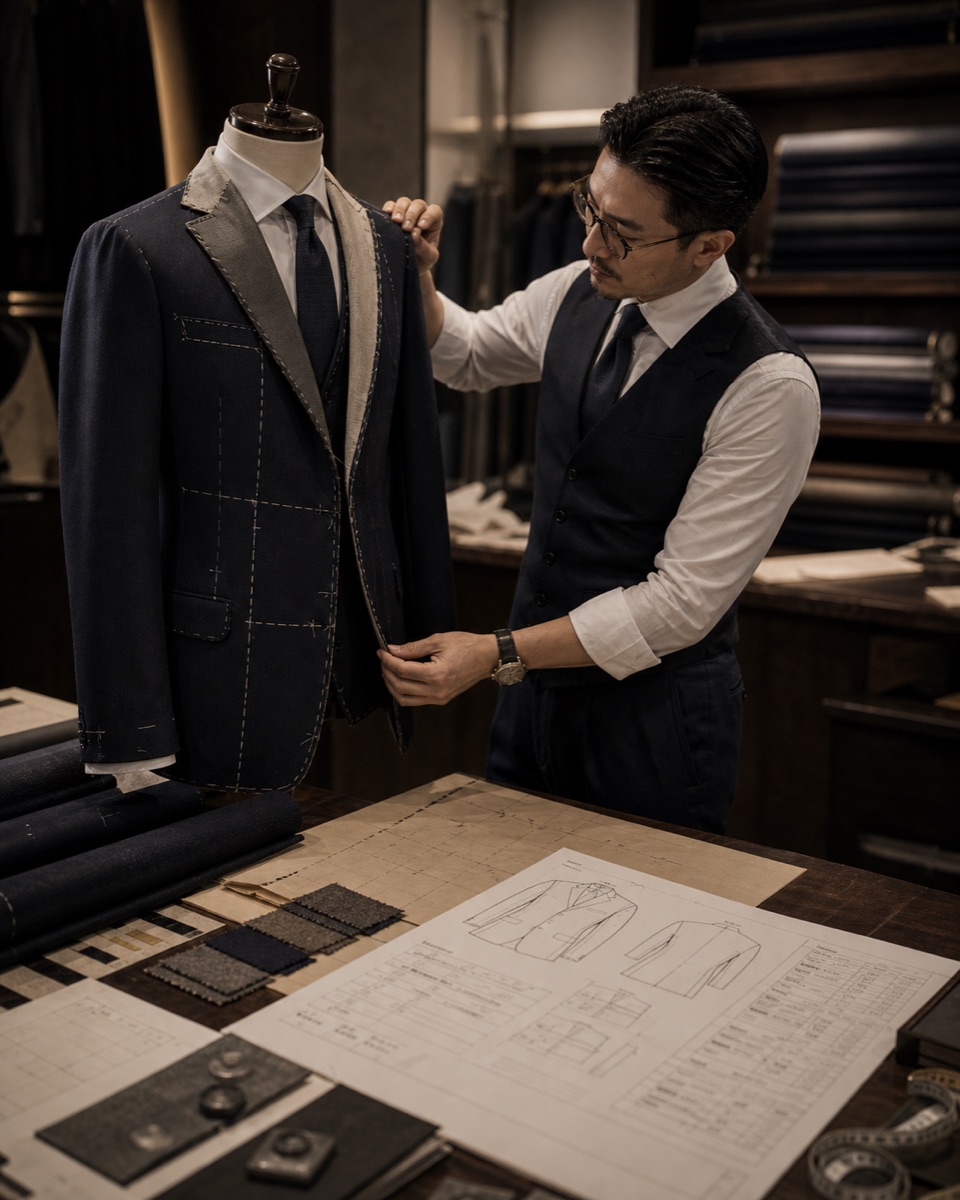
Keep comments in one dated decision record. Separate approved points, corrections, open choices, and evidence required for the next gate. The suit sample approval process explains how a reviewed sample becomes a bulk-production reference rather than an isolated garment.
5. Define quotation and purchase-order controls
Agree which document contains the commercial offer, how long its assumptions remain current, which buyer file it references, what is included or excluded, and which authorised people can accept a revision. A later purchase order should use the same style, colour, size, label, packing, destination, and version names as the approved product package.
Do not treat a forecast, sample request, quotation, purchase order, and production release as interchangeable. State which document authorises each stage. If product, quantity, destination, or timing changes, use a written impact review rather than assuming that the earlier offer or date still applies.
6. Set the quality-evidence and escalation route
Before production, identify the approved reference, inspection stages, measurement and workmanship records, component and label checks, packing evidence, corrective-action method, and people authorised to accept, hold, correct, reinspect, or escalate a finding. The buyer does not need every supplier to use the same form, but it should be possible to connect each record to the correct style, colour, size, lot, and product version.
Use the suit factory audit checklist to review how the supplier controls documents, materials, production flow, inspection, packing, and corrective actions. Onboarding should carry the relevant audit actions into the first-order plan instead of leaving them in a separate report.
7. Confirm labels, packing, and handover data
List the unit, inner-pack, and carton information required for the receiving route. This may include size labels, care labels, buyer branding, hangtags, barcodes, garment covers, size stickers, carton assortments, carton marks, packing lists, destination splits, and wearer or store allocation. Artwork and wording should have an owner, version, and approval record.
Name the logistics and receiving contacts, the documents expected before handover, and how shortages, visible damage, assortment errors, or document discrepancies will be reported. Shipment terms and local import requirements should be checked by the qualified parties for the actual destination; onboarding should not replace those decisions with a generic template.

8. Review the first order before opening the next one
After receiving, compare the approved-versus-actual records: quantities, size and colour allocation, product observations, labels, packing, acknowledged milestones, open corrective actions, warehouse discrepancies, wearer or sales feedback, and any change that should enter the next product version. Separate isolated issues from repeated patterns and separate specification decisions from supplier execution against the approved standard.
Close the onboarding phase with named actions and owners. Preserve the approved sample, tech pack, measurement chart, materials, artwork, packing references, quality records, receiving evidence, and authorised changes so the next order begins with a controlled baseline.
Suit supplier onboarding checklist
- Verified legal, operating, invoicing, payment, and production-party record
- Commercial, product, quality, logistics, and buyer approval contacts
- Controlled product package with versions, owners, and open decisions
- Sample purpose, review evidence, corrections, and bulk-release gates
- Quotation, purchase-order, change, and production-release authority
- Inspection, corrective-action, escalation, and shipment-release evidence
- Labels, artwork, packing, destination, and receiving requirements
- First-order review, open actions, and repeat-order baseline
MrSure is a China-based suit supplier serving international B2B buyers. We can review an onboarding brief after the buyer shares the proposed product scope, target market or wearer group, product-file status, sample objective, quantity range, destination, and approval route. Buyers can send a sourcing enquiry with the information already available; exact prices, order minimums, schedules, capacity, materials, and commercial terms depend on the confirmed programme and written agreement.