
A linen suit supplier conversation should start with the intended warm-weather programme, not a generic request for a “lightweight suit.” Linen, linen blends, and linen-look directions can create different visual texture, drape, construction choices, colour options, and commercial considerations. The actual fibre content, weight, finish, availability, and bulk suitability must be confirmed from the chosen material and approved sample.
For resort, destination-wedding, summer retail, hospitality, and relaxed-formal programmes, the buyer needs to connect the look they want with a clear product standard before sampling or pricing.
1. Describe the climate, wearer, and appearance goal
Start with the wearing environment: indoor or outdoor use, season, destination, expected formality, and typical duration of wear. Then describe the desired appearance—structured or relaxed, crisp or textured, two-piece or three-piece, light or dark colour direction, and whether the product is intended for retail stock, named wearers, or a group programme.
These points help a supplier discuss material directions without treating “linen” as a promise of a particular handfeel, performance, or availability.
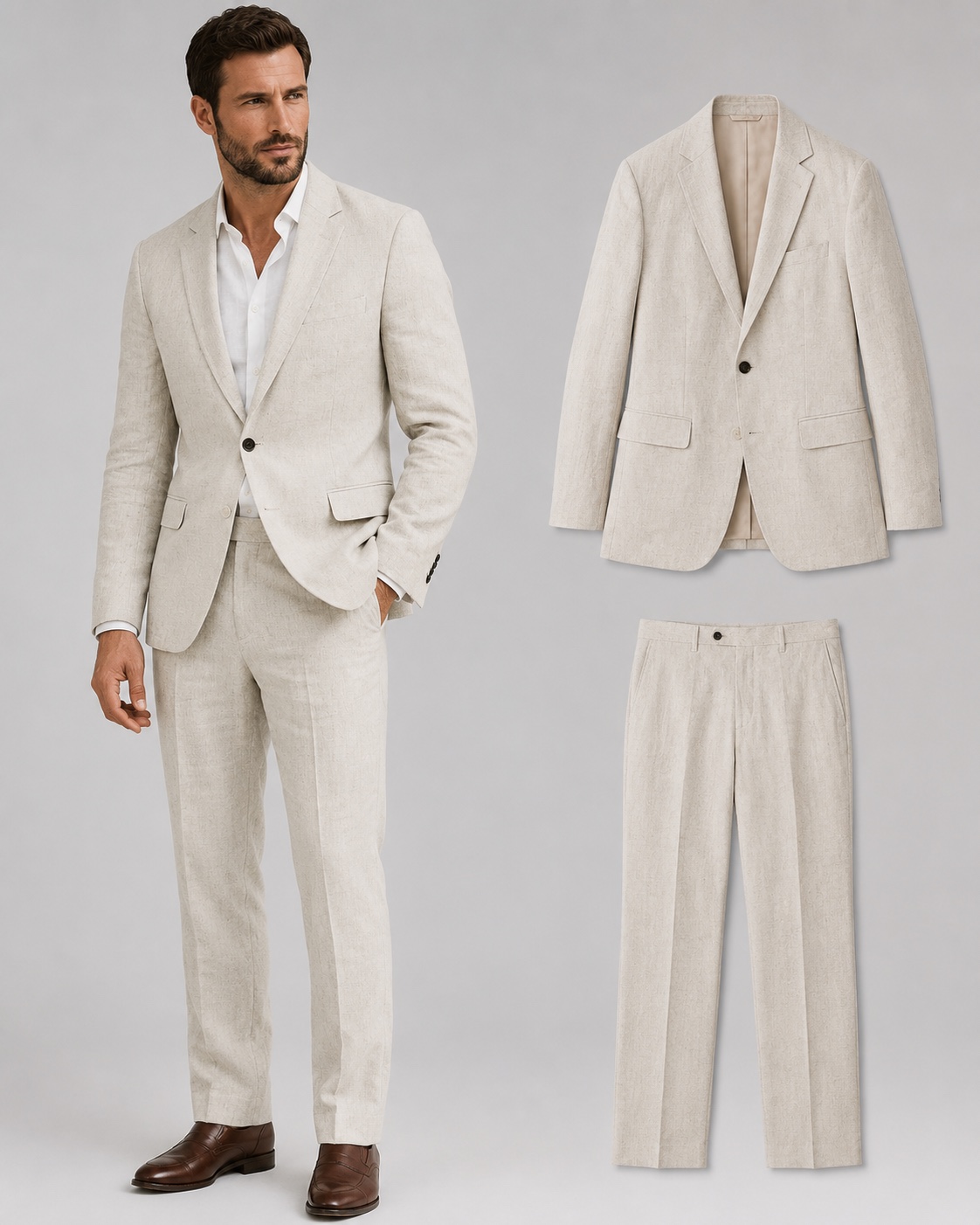
2. Verify the actual material before approving the product name
A catalogue image, fabric name, or screen colour is not a final material specification. Ask the supplier to review the selected swatch or material reference alongside the planned jacket construction, lining direction, trouser cut, buttons, and target colour. If the buyer needs a stated fibre composition, weight, or care direction, it should be confirmed in the approved material and commercial documentation rather than inferred from a visual label.
Use the sample to assess the combined garment direction: surface texture, drape, visible construction, colour appearance, fit, and presentation. If the material changes after the sample is approved, the quotation and production plan may need to be reviewed again.
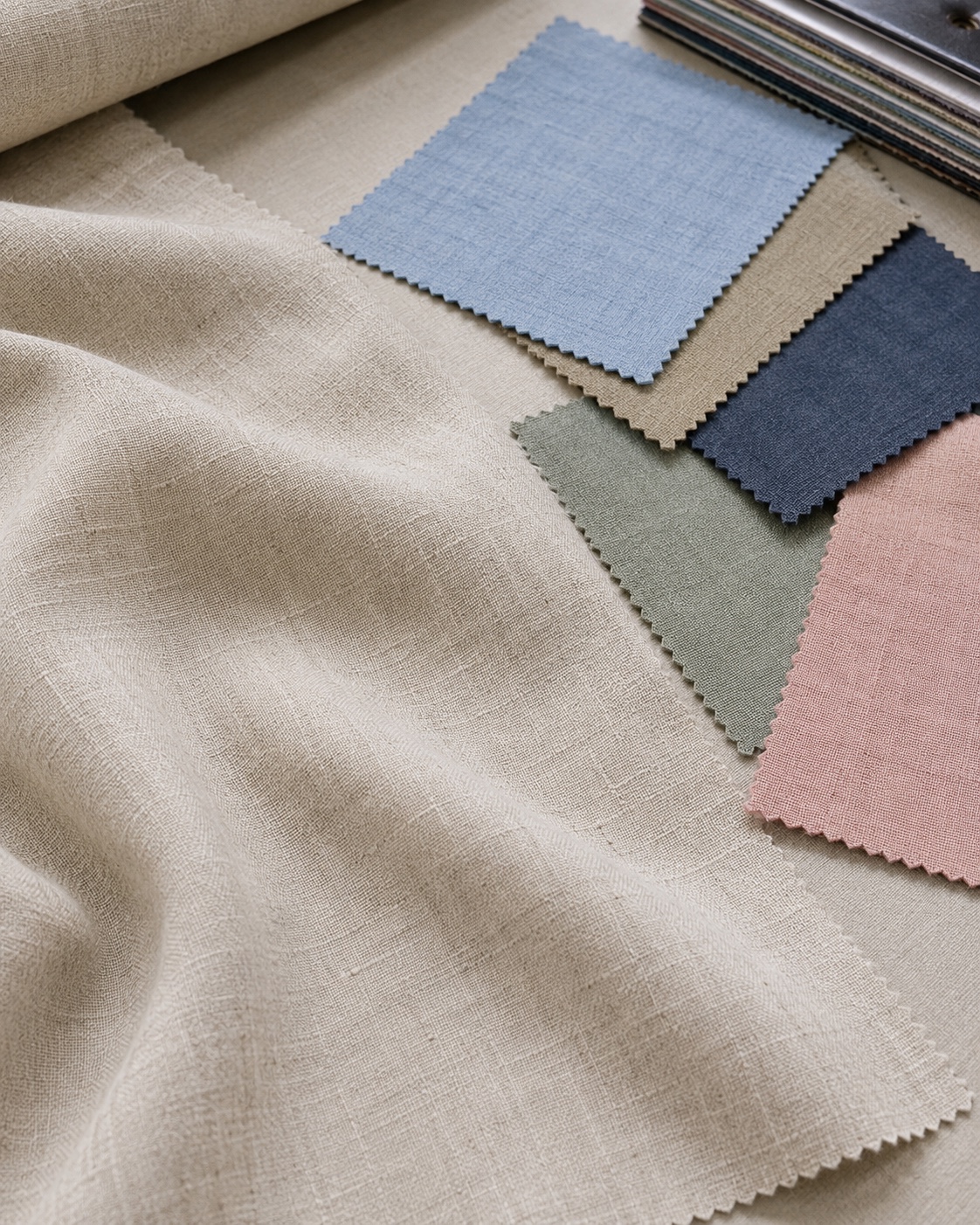
3. Keep construction and fit aligned with the fabric direction
The same pattern can present differently in different materials. Buyers should review the approved suit as a whole: lapel, shoulder, jacket front, lining, trouser shape, hem, pressing, and overall silhouette. State which details are fixed and which remain open to supplier input before production planning begins.
For a broad size range or a new fit direction, keep fit comments attached to the exact sample, size, and material reference. This makes later grading, inspection, and repeat orders easier to discuss without guessing from a previous image.
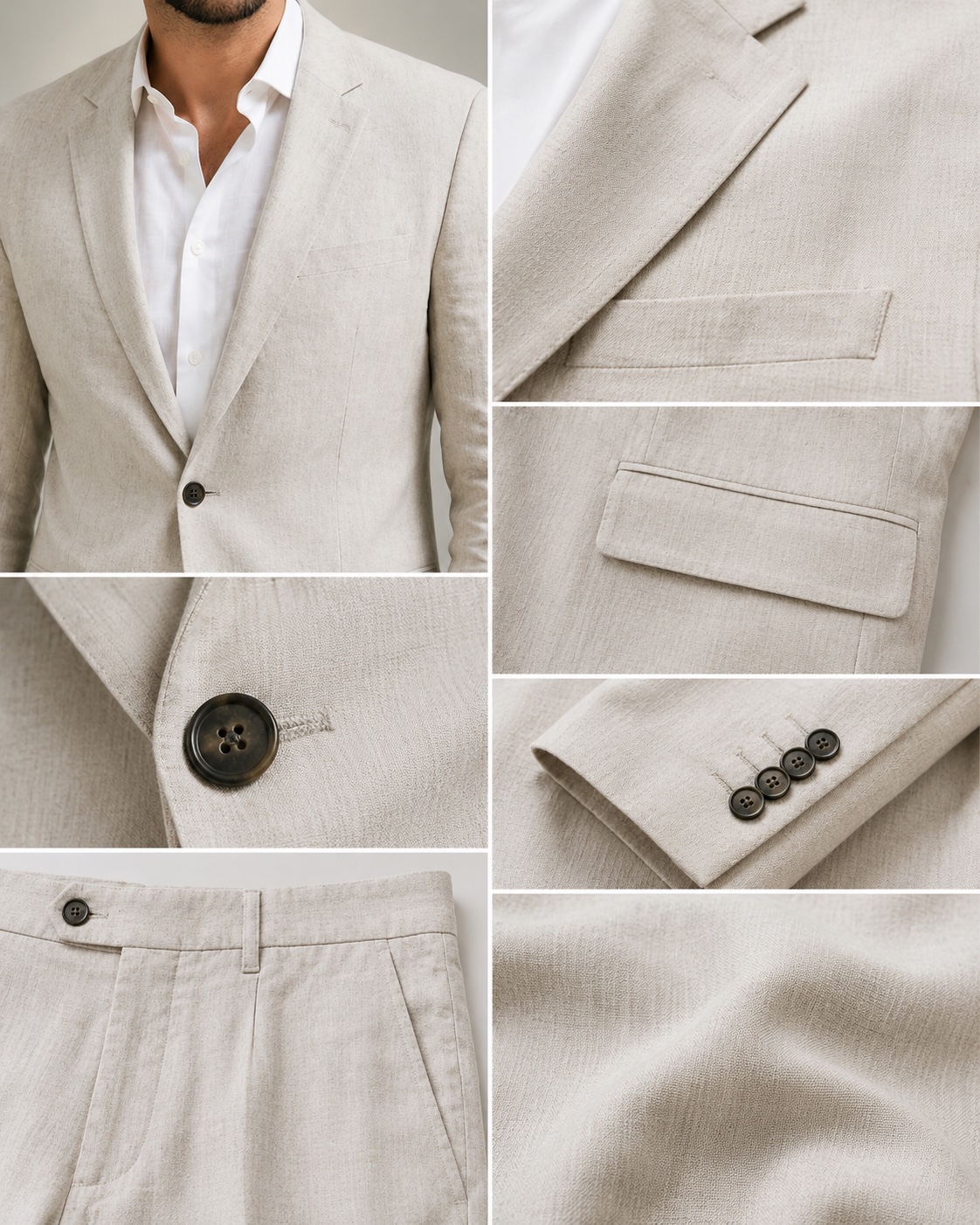
4. Plan colours, quantities, and packing as one order file
Warm-weather programmes often begin with a light or neutral colour direction, but the final colour range should be confirmed from the selected material reference. Build an order matrix that lists style, colour, size, quantity, destination, and any label or packing requirements. This gives the supplier enough information to distinguish a preliminary material discussion from a production-ready request.
Do not assume that a material, colour, or size can be repeated indefinitely. Keep the approved swatch, colour reference, sample notes, size matrix, labels, packing method, and final inspection record with the order file for future review.
5. Send a useful linen-suit sourcing brief
An effective brief includes the target market, wearing environment, product reference, preferred appearance, material direction, colour plan, size range or mix, estimated quantity, sample purpose, destination, and timeline. It can also state any required information the buyer needs confirmed before placing an order.
Buyers can read the wholesale suit fabric guide, compare the wool suit manufacturer buyer guide, plan a wholesale suit sample order, or send a sourcing inquiry with a material reference and warm-weather programme brief.