
A suit size chart should be an approval tool, not a generic image attached at the end of a product page. Before bulk production, the buyer and manufacturer need to agree which measurements matter, how the chart relates to the approved sample, which sizes need extra review, and how accepted changes will be recorded.
For menswear brands, retailers, uniform programs, ecommerce teams, and sourcing partners, a clear size chart helps connect fit expectations with production, packing, and later reorders. It does not remove the need for sample review or promise that every wearer will have the same fit outcome.
1. Start with the approved product and fit direction
The size chart should match the actual jacket, vest, trouser, and construction direction being ordered. Before reviewing numbers, confirm the product type, fit direction, rise, trouser shape, jacket length, shoulder expression, lining, and any special components.
Do not use a past size chart as a substitute for checking the current sample. A similar-looking suit can use a different pattern, fabric, construction, or intended fit.
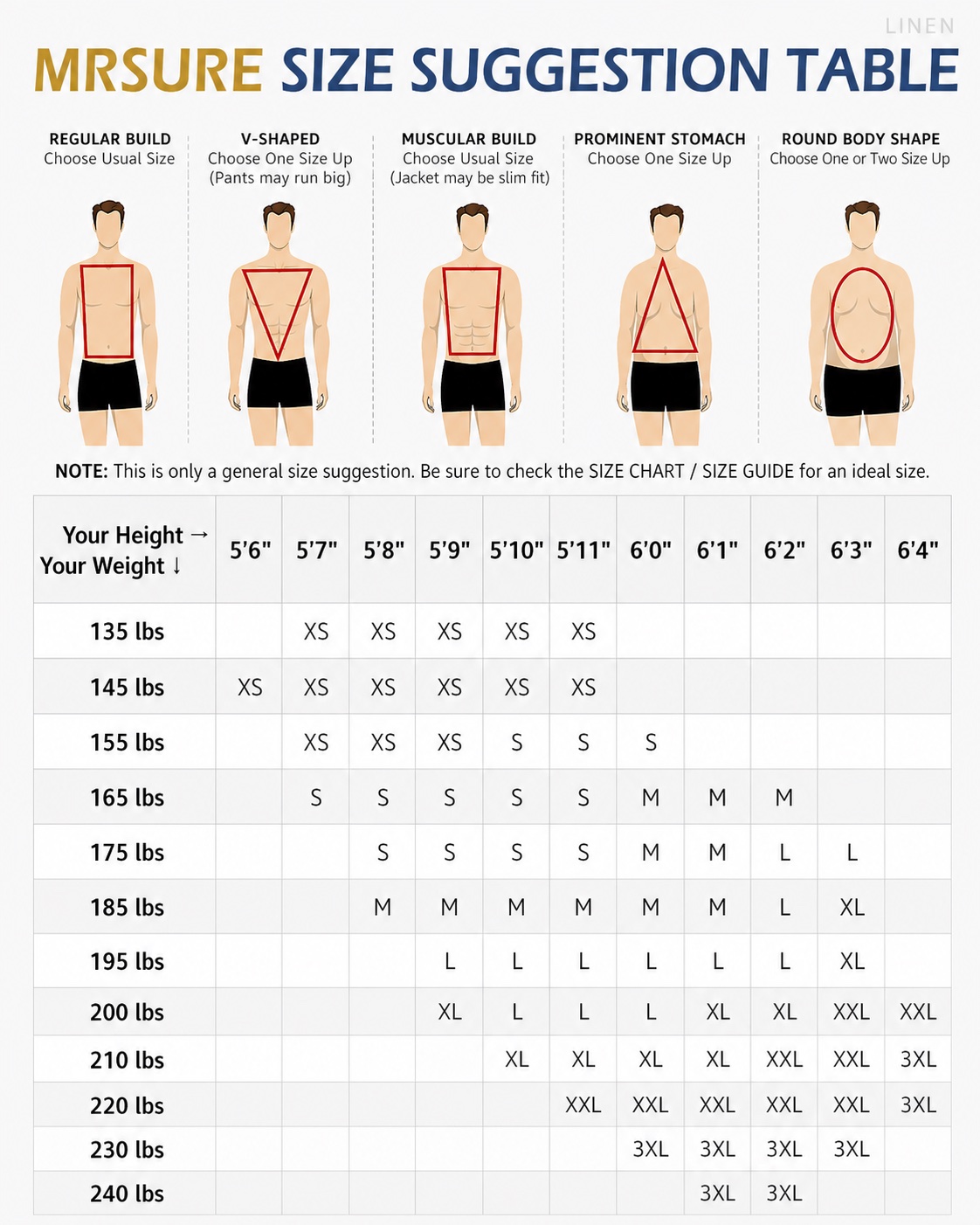
2. Identify the points of measure that control the order
The buyer and manufacturer should identify the relevant points of measure for the garment. Depending on the product, this may include chest, waist, hip, shoulder, sleeve, jacket length, trouser waist, inseam, thigh, hem, vest chest, and back length. The order record should state the measurement method and whether values are garment measurements or body-reference guidance.
The chart should also make clear which size is the base sample and which sizes need to be checked during grading or final inspection.
3. Review a fit sample before approving the full range
One central sample can confirm the product direction, but it may not prove every size in a broad range. For a new pattern, wide size range, group program, or private-label project, buyers should discuss which additional sizes or fit references deserve review before bulk cutting.

Keep comments specific: name the size, measurement point, requested change, and approved result. A vague note such as “make it slimmer” is difficult to carry accurately into grading and repeat production.
4. Connect the chart to size allocation and packing
The chart does not replace the order matrix. Buyers still need to show the required quantity by style, colour, size, destination, and reserve need. For retail or ecommerce, historic sales and return feedback may inform the mix. For uniforms and group programmes, confirmed wearer data or a controlled fitting process may be more useful.
Packing labels, barcode files, size stickers, carton marks, and receiving lists should use the same approved size naming. This reduces avoidable confusion after the garments arrive.
5. Preserve the measurement record for reorders
Save the approved sample reference, size chart version, points-of-measure method, approved grading notes, size mix, and any accepted fit changes with the order file. A later reorder should start from that record rather than from a screen image or an informal message history.
Buyers can use the bulk suit size and colour-mix guide, review the wholesale suit sample order guide, follow the bulk suit quality-control checklist, or send a sourcing inquiry with a draft size chart, product direction, and target size range.
Add tolerance and measurement-method control to the size chart
A target table alone does not show how a bulk garment will be accepted. For each relevant point, identify the measurement method, garment condition, unit, target, approved plus-and-minus range where applicable, and the stage at which the check is made. Record sample actuals beside the target so any accepted difference is resolved before the file reaches production.
Use the suit measurement tolerance guide to connect the size chart to repeatable measuring methods, representative bulk checks, pattern review, corrective action, and shipment-release authority. Do not copy a universal tolerance across every point; the buyer's technical standard should reflect the garment, construction, material, size range, and intended use.