
A retail chain suit supplier discussion should begin with the buying program, not only a product photo or a target unit price. Multi-store buyers need suits that can be sampled, priced, allocated, received, displayed, inspected, and reordered with consistent records across locations.
MrSure supports B2B menswear buyers, sourcing partners, retailers, private-label programs, hospitality operators, corporate teams, and group businesswear projects. This guide helps retail chain buyers prepare a clearer suit program brief before requesting samples, pricing, or bulk production.

1. Separate assortment planning from product selection
A retail chain may need core business suits, seasonal colors, wedding or formalwear options, entry-price styles, higher-grade styles, or private-label capsule products. These roles should be separated before the buyer asks the supplier to quote.
Record the sales channel, store count, target customer, price position, season, launch window, style count, and whether the program is a first test or a repeat range. A supplier can respond more accurately when the commercial purpose is visible.
2. Define the approved product standard
The brief should describe the suit type, jacket construction, lapel, closure, pocket layout, vents, lining, trouser shape, vest requirement, fabric direction, color standard, buttons, labels, hangtags, barcodes, and packing method.
Buyers can review the MrSure wholesale menswear collection, the department store suit supplier guide, or the online menswear brand supplier guide as related planning references. The final order should still be controlled by an approved specification and sample.
3. Build a store-level size and color matrix
Retail chain suit orders are easier to manage when quantity is separated by style, color, size, store, warehouse, and launch priority. A single total quantity does not show whether key sizes are protected or whether slow colors are over-ordered.
The buyer should distinguish confirmed quantities, forecast quantities, reserve stock, display units, and replenishment expectations. The bulk suit size-ratio planning guide can help turn demand assumptions into a clearer order matrix.
4. Control fabrics, colors, and repeat orders
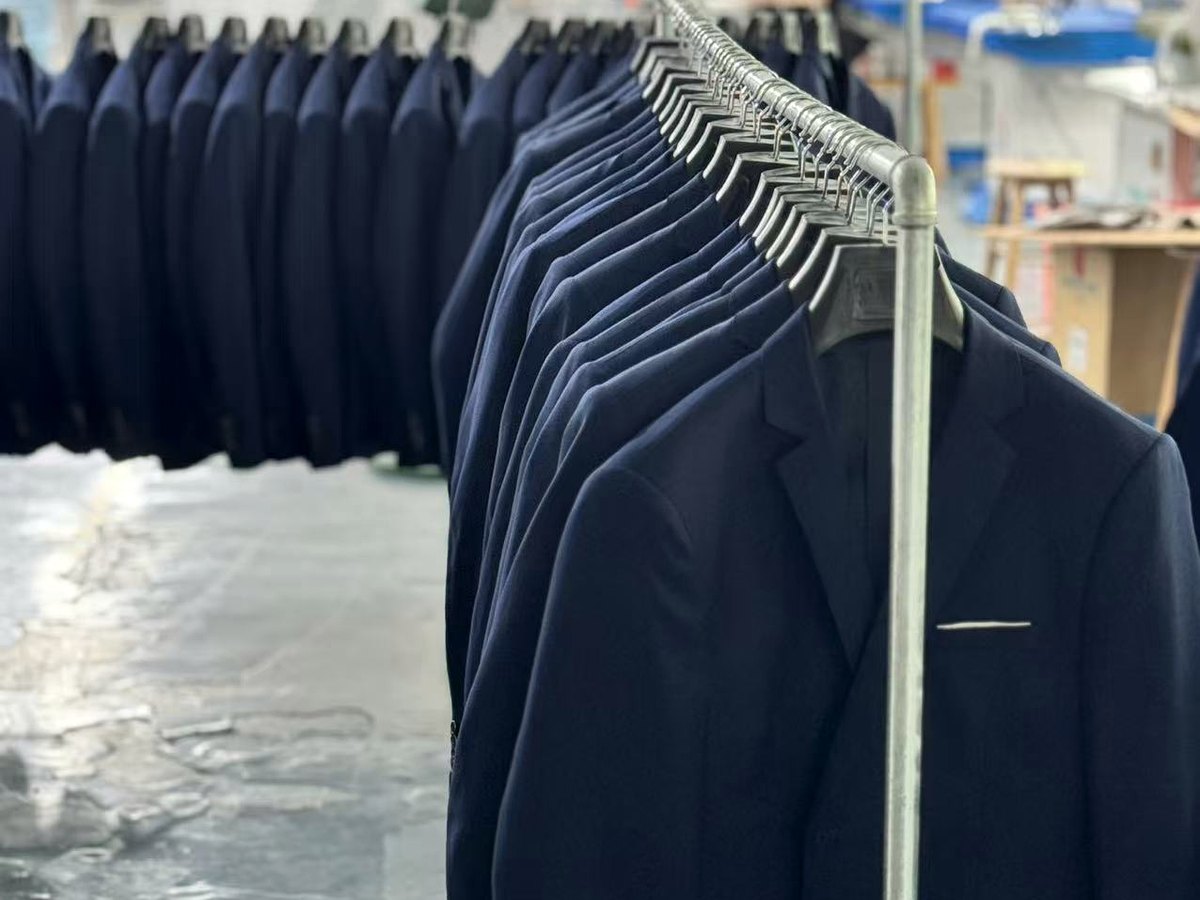
Retail programs often need consistency between first shipment and later replenishment. The buyer should confirm which fabric reference, color standard, trim list, and approved sample control bulk production.
If the program uses multiple colors, identify which colors are core, which are seasonal, and which require closer approval. For repeat orders, keep records of the approved fabric, color reference, size matrix, labels, packing method, QC notes, and accepted changes.
5. Prepare retail labels, barcodes, and packing rules
Retail receiving depends on correct labels, hangtags, barcodes, carton marks, SKU information, packing lists, and store allocation. These details should be approved before production because late changes can affect packing, inspection, and shipment preparation.
Confirm whether goods need to be packed by store, style, color, size, warehouse rule, or sales channel. A clear packing matrix reduces sorting work after delivery and gives the buyer cleaner records for later replenishment.
6. Define QC evidence before shipment
Quality control should compare finished goods with the approved sample, measurement chart, fabric reference, trim list, order matrix, label files, barcode files, and packing instructions. Buyers should decide what evidence they need before shipment, such as appearance photos, measurement records, pressing checks, packing photos, or carton allocation checks.
The bulk suit quality inspection checklist can help buying teams define inspection points without turning the supplier discussion into vague quality language.

7. Keep one controlled reorder file
A retail chain program becomes easier to repeat when all approved details stay together: product specification, sample reference, measurements, fabric and color approvals, labels, barcode files, size matrix, store allocation, packing records, QC notes, shipment feedback, and sales or replenishment notes.
Reorders should begin from the controlled file rather than a new product photo. This helps the buyer protect consistency while adjusting quantities based on actual store demand.
Retail chain suit supplier brief checklist
- Store count, channel, target customer, price position, and launch timing
- Style roles, colors, sizes, quantity assumptions, and store allocation
- Suit construction, fabric, lining, trims, labels, hangtags, and barcode needs
- Approved sample, measurement chart, size ratios, and color references
- Packing method, carton marks, store or warehouse receiving rules
- QC evidence, shipment release rules, and accepted change records
- Reorder references, replenishment data, and continuity requirements
Buyers can review the suit manufacturing process, the MrSure wholesale collection, or send a sourcing inquiry with a retail chain suit brief. A useful supplier discussion connects assortment planning, product standards, allocation, packing, inspection, and repeat-order control before bulk production begins.