
A double-breasted suit wholesaler should be evaluated against a clear product range—not only one strong-looking product image. The front closure, lapel proportion, jacket length, waist shape, trouser cut, colour selection, size allocation, and intended wearer all affect whether a double-breasted style will work for a retail, formalwear, hospitality, corporate, or group programme.
For menswear brands, retailers, trading partners, wedding businesses, and event suppliers, the useful first question is not simply “Do you make double-breasted suits?” It is how the approved style will be defined, sampled, checked, packed, and repeated.
1. Define the role of the double-breasted style
A double-breasted suit can be the formal hero of a collection, a selective occasion style, a hospitality-facing uniform direction, or part of a coordinated event range. Before requesting a quotation, identify the target wearer, climate, use frequency, sales channel, required formality, and relationship to the rest of the range.
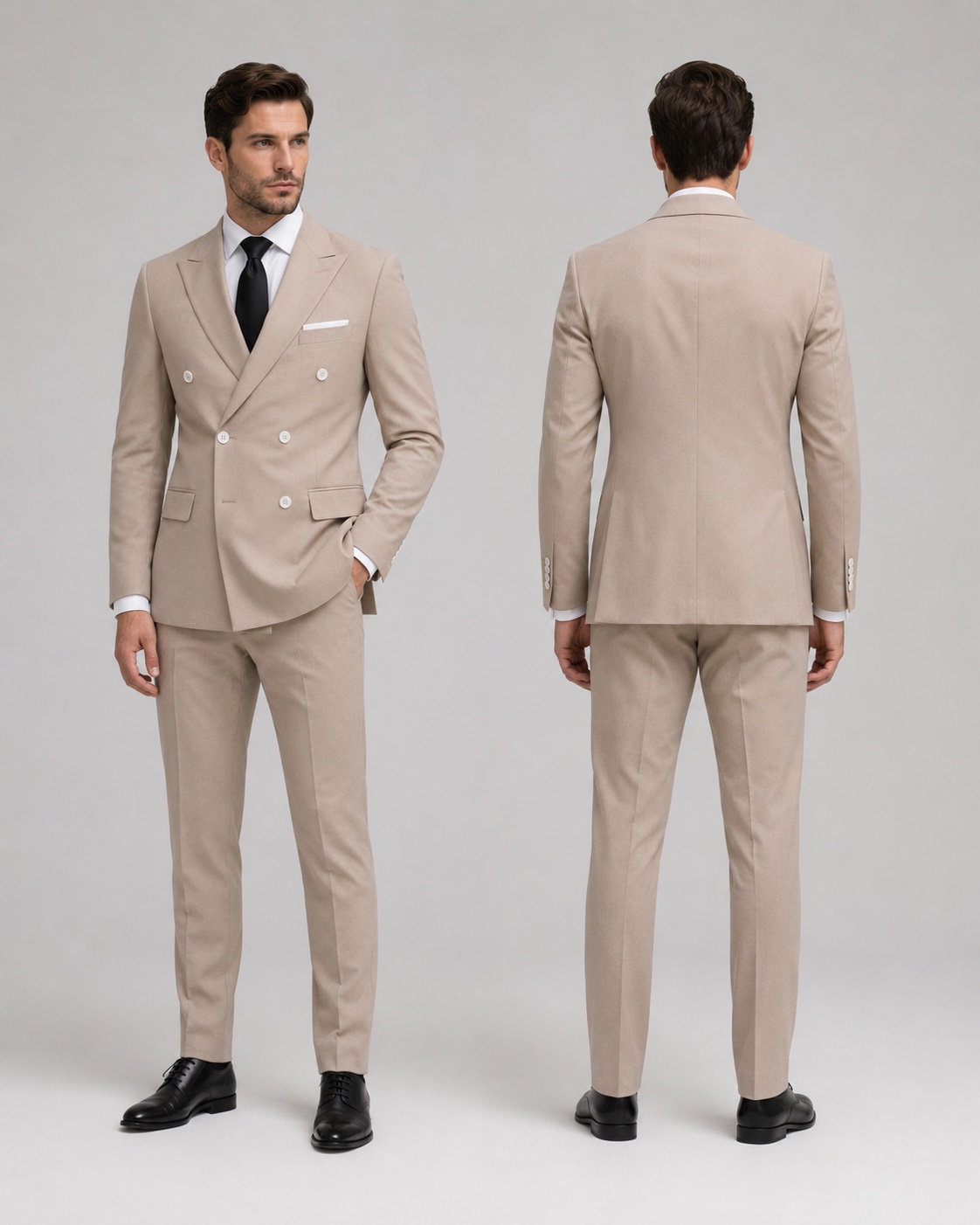
State whether the buyer is reviewing a two-piece suit, a three-piece option, or a coordinated formalwear set. Record the preferred lapel, button stance, pocket direction, vent, trouser shape, lining direction, and any accessory scope. A product name alone does not make these decisions visible to a supplier.
2. Approve proportion and construction with the sample
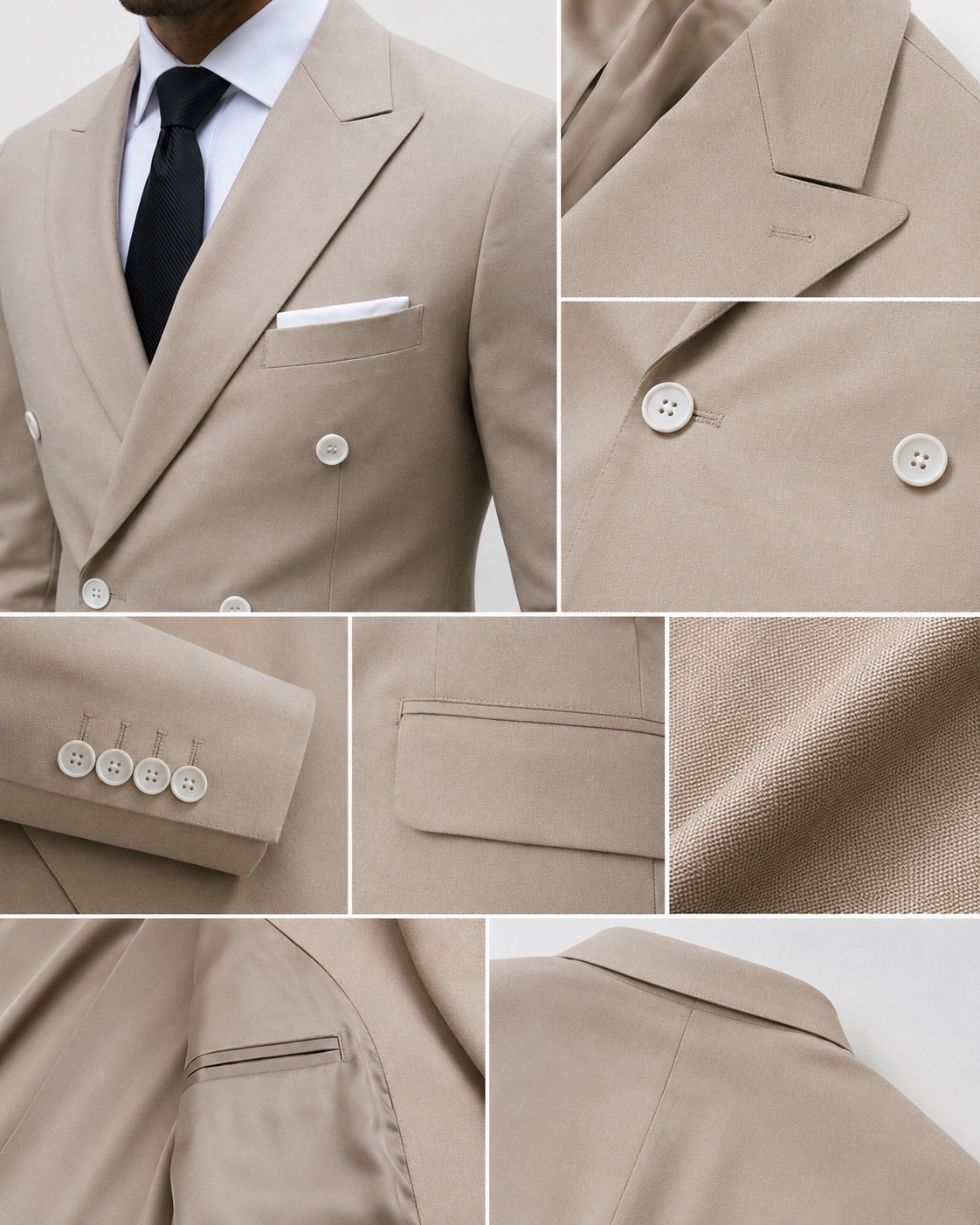
Double-breasted jackets are especially sensitive to proportion. The overlap, button placement, lapel width, shoulder expression, jacket length, waist suppression, and trouser balance should be reviewed together on the approved sample or agreed product reference.
Keep feedback specific. Instead of asking for a “sharper” or “slimmer” look, identify the sample size, visible point of change, requested adjustment, and approved result. That record gives the production and quality teams a usable reference if the suit is later made in more than one colour or size.
3. Build a controlled colour and size plan
More colours and sizes do not automatically create a better wholesale range. Buyers should separate core colours from optional colours, then connect each colour to an expected size mix, destination, and selling or wearer use. A limited opening range with a clear reorder record is often easier to control than many colour choices without demand evidence.
Colour should be approved from the real material reference rather than a screen image. Availability, matching across jacket and trousers, and the final bulk suitability of the selected material must be confirmed with the supplier at the time of sampling and quotation.
4. Keep the product brief connected to packing and checks
The order file should connect style, colour, size, quantity, labels, packing method, destination, and inspection reference. A buyer can then check finished suits against the approved sample and order matrix rather than relying on a product title or a past photograph.
For a retail or group order, use the same product and size naming in the purchase order, labels, packing list, carton marks, and receiving record. This gives a later reorder a clearer starting point.

5. Prepare a brief a wholesaler can price accurately
A practical double-breasted suit brief includes a product reference, component scope, fit direction, material and colour direction, size range or mix, expected quantity, label or packing needs, destination, sample purpose, and decision timeline. If a detail is still open, mark it as open rather than assuming it is included.
Buyers can compare the wholesale three-piece suit assortment guide, review the bulk suit size and colour-mix guide, use the wholesale suit sample order guide, or send a sourcing inquiry with their double-breasted product reference and programme requirements.